
NEWSLETTER | VOL. 60, April 2026
Welcome to this month’s edition of The Hollywood 360 Newsletter, your place to get all the news on upcoming shows, schedule and interesting facts from your H360 team!

Carl’s Corner
by Carl Amari
Turbulent Times Inspire the Fascinating Radio Series, I Was a Communist for the FBI
by Dr. Joe Webb
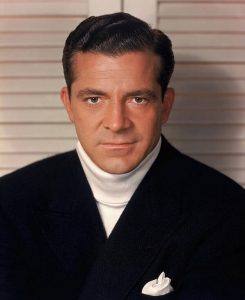 The world was a different place in 1952. The news was filled with stories of the Korean War, Russia’s activities in Eastern Europe, efforts by Western democracies to thwart the spread of Communism, blacklists of entertainers for their affiliation with the US Communist Party or related groups… and all that turmoil creates the environment for a big hit radio series. The star of that series was himself a staunch opponent of blacklisting and strong defender of free speech. The subject of the series was the claimed activities of a single FBI informer, out of more than a thousand around the country, and the Bureau didn’t trust him and did its best to distance themselves from him! The strange circumstance, combined with the guidance of noted radio syndicator Frederic W. Ziv, resulted in the big budget spy and espionage series I Was a Communist for the FBI. The production budget in today’s US dollars was more than $150,000 an episode, bigger than most all of radio’s top mystery programs. Supporting actors were among radio’s best known and most respected voices.
The Oddest Couple: Dana Andrews and Matt Cvetic
It is hard to understand how anyone in 1952, from the vantage point of 2024 and all of the political events of seven decades later, could even think of being involved in a program with such a premise. This is one of radio’s most impressive series, yet its reputation has been tarnished over the decades by circumstances not of its making. How could actor Dana Andrews be associated with a production like I Was a Communist for the FBI? His presence actually brought nearly-instant credibility to the project. He was a well-known Hollywood union activist, speaking out and taking action against witch-hunts, and was a defender of free speech. He protested Blacklists and how hints of rumor alone could ruin reputations and livelihoods. There was interest in showing that one could be patriotic without using Blacklists, be in support of free speech, show gratitude for freedom, yet be aware that the actions of totalitarian powers could pose a looming threat in the post WWII world.
Matt Cvetic, an FBI informant-for-hire, was just one among a thousand or so other informants. After years of faithful and dependable reporting to the Bureau, he became reckless, unreliable and untrustworthy. How does he become the inspirational “hero” of a hit 1951 Warner Brothers movie? How did his experience become the focus of one of radio’s biggest-ever syndication successes? He eventually falls from grace with the FBI and from Ziv productions itself.
It was the creativity of skilled radio writers, exceptional supporting actors, and Ziv’s top-notch production team that had more to do with the quality of the series than the chronicling of Cvetic’s life.
Matt Cvetic, Flawed “Hero”?
One might think that Matt Cvetic’s best contribution to the radio series was his detailed experiences as an informant. These were outlined in his 1950 testimony to the House Un-American Activities Committee. (HUAC was formed before WWII, in 1938). The series of Saturday Evening Post articles that appeared after the HUAC testimony created attention in Hollywood as producers and studio heads believed it could be the foundation of an exceptional screen event.
It was Cvetic’s personal turmoil, stirred by his informant activities, that made the radio series so compelling. He lost his marriage, important family relationships, and suffered great loneliness. He endured the mistrust of both his FBI handlers and the Communist believers he had infiltrated. His informant assignment may have been a springboard for imaginative fictional story ideas, but it was these tensions with the FBI and his family, known to the writers of the series, that gave the fiction of the scripts the realistic touch that connected with the audience.
Dana Andrews: His Own Demons
Dana Andrews was one of the few movie actors who had a great voice for radio and the acting techniques to match it. Many of Hollywood’s best movie actors had great difficulty using their voice in the nuanced way radio required, but Andrews was highly capable of it. The series came to Andrews at a good time. His alcoholism, revealed years later, was starting to limit his film opportunities. This series kept his talent in public view. (He would later overcome his problems, resume a successful career, and become an advocate for those struggling with addiction).
How interesting it is that the success of the series relied on the combination of a “hero” whose personal life was falling apart, and a well-known star with his own problems holding onto his notoriety. It was melded together by a genius radio entrepreneur… and it worked.
The Program’s High Production Standard
Frederic W. Ziv never skimped on production for what he believed would be a big success. He already had successful radio series such as Boston Blackie and Philo Vance, but it was his big bankrolling of Bold Venture with Humphrey Bogart and Lauren Bacall that was a leap ahead. That series came at a time when the networks were starting to shift their long term plans and financial resources into television. Ziv saw an opportunity to provide radio stations with a program that the networks would be reluctant to fund at the level that Ziv would. Ziv would become a successful television entrepreneur, himself, but, in the early 1950s, he knew that radio stations were hungry for content, whether they were network affiliates or independents. He realized his time window of opportunity for his radio programs would close in a few years. He was confident that it was the right time for a big budget offering that had the flexibility of syndication at a time when the networks would not consider such an approach. He was right. Over 600 stations, big and small, bought licenses for Bold Venture. It was the biggest financial success for a syndicated program at that time. He thought he could do it again.
Ziv was attracted to the Cvetic story. In his mind, the 1951 I Was a Communist for the FBI movie publicity provided a fertile ground for a compelling radio series. In the 1953 Radio Daily Annual Yearbook, Ziv wrote about the success of the radio series and its 600 stations and said “There is nothing wrong with radio that showmanship won’t cure.” He was defying the conventional network radio wisdom.
The series was a big budget enterprise. It was $12,500 per episode, which is nearly $150,000 in current dollars (US$2026). Ziv was paying $1,000 per script, about $11,500 each in today’s dollars. It was among the highest payment rates in radio, even for network shows.
The writing of the series was critical. Cvetic’s life as an informant was mostly filled with finding documents and conversations and sitting through meetings. It was not always the stuff of exciting and memorable radio series. No, Cvetic’s radio life would be quite different and more exciting, and highly fictional. The shows were created by writers who could turn almost any plotline, like hum-drum grocery shopping, into a cat-and-mouse, spy versus spy, double- and triple-cross adventure while the world’s safety hung in the balance with danger at every turn. One of the reasons there was so much paranoia in the plotlines was that in real life there were so many FBI informants in the Party that members were always suspicious of each other. The informant’s life was tedious, but that could not be the life of the radio Matt Cvetic. The writers created a world that may have had Cvetic’s name, but not his life; the fictional one was more heroic.
- Milton Geiger was the most veteran of the series writers. He had written for radio for almost 20 years. His credits included variety, comedy, and drama for shows like Royal Gelatin Hour, Columbia Workshop, Inner Sanctum, Cavalcade of America, Molle Mystery Theater, The Doctor Fights, Hollywood Star Time, Adventures of Philip Marlowe, Hallmark Playhouse, Screen Director’s Playhouse, The Line-Up, Lux Radio Theatre, Suspense, Eternal Light, and others. He also wrote for many 1950s and 1960s television series.
- Don Brinkley had writing credits for Have Gun – Will Travel, Mr. & Mrs. North, and others. He later had a successful television career, writing for The Untouchables, The Fugitive, Have Gun – Will Travel, Kraft Suspense Theatre, The FBI, The Virginian, Ben Casey, Bat Masterson, The Man From UNCLE, Rawhide, Ironside, and many others.
- William “Bill” Hampton’s writing credits included Proudly We Hail, Screen Guild Theatre, Family Theater, and Hollywood Star Theater.
People Behind the Scenes and in the Control Room
Ziv producers Jerome Lawrence and Robert E. Lee were radio veterans who became noted playwrights. Their work on radio included Columbia Workshop, Railroad Hour, Presenting Charles Boyer, Halls of Ivy, Hallmark Playhouse, and other programs. Their first notable collaboration with Ziv was Favorite Story. They would eventually write the famous Broadway play that became a movie, Inherit the Wind, and the hit play Auntie Mame. They had many other successes. They won Peabody Awards for distinguished Achievement in Broadcasting, and the Lifetime Achievement Award from the American Theatre Association. Lee was a co-founder of the Armed Forces Radio Service and taught playwriting at UCLA. (Classic radio fans may better recognize him as “Mr. Janet Waldo.”)
Henry P. Hayward was the director of the series. He had a long career in radio production, on the advertiser and the broadcaster side of the business starting in the 1930s. He was considered to be Ziv’s right hand when it came to production of the company’s biggest shows. His experience on the advertising and broadcasting side gave him a unique perspective of the challenges and opportunities faced by station owners and the benefits that syndicated programming could offer them.
The music was by David Rose, a highly regarded arranger and orchestra leader, who became the music director of the Mutual network. A meeting while in the Army with fellow soldier Red Skelton began a collaboration with Skelton on radio and television that lasted more than two decades. When contracted for I Was a Communist for the FBI, Rose’s career was rising and he would have great success in the later 1950s and the 1960s.
Truman Bradley was the announcer for the series. Most classic radio enthusiasts know him for his time on the Suspense series under the sponsorship of Roma Wines. In just seconds, he could change his voicing from strong and authoritative tones that conveyed the excitement of the Suspense episode to a soft and delicate description of what wines would enhance a special meal, even a wartime scarcity meal like bean casserole. His commanding voice and presence in this series underscored the excitement and looming danger of the episodes.
Supporting Cast of Radio Stars and Pros
The supporting actors in the series were some of the biggest names and voices in radio. If you didn’t know their names, you knew their voices. Most all are immediately recognizable, just by hearing them say a few words. These actors were specifically identified in official Ziv show publicity:
- Parley Baer, Harry Bartell, Gail Bonney, Bill Bouchey, William Conrad, Paul Dubov, Sam Edwards, Betty Lou Gerson, Frank Gerstle, Virginia Gregg, Jonathan Hole, William Johnstone, Byron Kane, Jack Kruschen, Harry Lang, Mary Lansing, Peter Leeds, Sheldon Leonard, Forrest Lewis, Marvin Miller, Gerald Mohr, Barney Phillips, Paul Richards, Marian Richman, Jeffrey Silver, Olan Soule, John Stephenson, Herb Vigran, Barton Yarborough, and others.
These performers noted their participation in the actors directories that casting directors would use:
- Alice Backes, Jeanne Bates, Robert Boon, Jack Carol, Joel Davis, Eddie Doring, Alice Drake, Joe DuVal, John Frank, Paul Frees, Bobby Gilbert, Donna Hanor, Bert Holland, Gladys Holland, Jean Howell, Leroy Lennert, Paul Maxey, Tony Michaels, Bob O’Connor, Peter Rankin, Jerome Sheldon, John T. Smith, Eleanor Tanin, Janet Warren.
Many of these voices were regulars on other Ziv programs, too, and they often didn’t mind not getting announced credit for their appearance. From a scheduling standpoint, Ziv was accommodating to the busy schedules of top actors. Because the shows were being recorded using the latest tape technology, and there was no specific broadcast time, it was common for Ziv to have sessions on weekends or times during the week when the actors would have fewer network radio assignments.
The Curious Life of Matt Cvetic and How the Program Arose
Cvetic’s assignments as an informer provided a general framework to the series. He was recruited by the FBI in the early 1940s to become an informant about Communist activities in his native Pittsburgh. He came to their attention when he was working at an employment agency. They were intrigued by his Slovenian heritage and upbringing. He spoke the language and was familiar with other Eastern European languages. He joined the FBI as an informant; it is important to remember that he was never an agent.
He was successful in his early years, and they were pleased with his work. He was working his way up the Party infrastructure, and winning the confidence of leaders and his fellow members. The FBI was concerned about Pittsburgh because it was a center of manufacturing, especially for steel. That product was essential for many different industries, like automotive, aviation, shipbuilding, and construction, but was also a key material in military defense equipment. The Communist Party had targeted unions as a general opportunity for political and practical influence, especially in defense industries. Having the Party gain control or direction of unions in critical industries was considered to be a great threat to the country, hence the FBI interest.
There were other informers as part of the FBI effort. Cvetic was just one of the many. These were not easy positions to fill for the Bureau. They needed competent people with strong and resilient psychological make-up. They were being called to live a lie, every day, and to manipulate the people they met to get the information and insight the Bureau needed. There was great pressure to constantly prove their loyalty to something they did not actually believe in. The work may have been tedious, but the pressure was incessant. Cvetic eventually broke down, and had to leave. His greatest loss over the years was family. His childhood was in a family of 11 children. Many of his siblings refused to associate with him once he affiliated himself with Communist activities. His own family was torn apart, and he fell into alcoholism. He had to leave. The FBI had slowly become dissatisfied with him, and he with them, and it ended.
The first time the general public heard of Cvetic was his House Un-American Committee testimony in 1950. It must have shocked his Communist acquaintances who attended the meeting with him. They learned for the very first time that he was undermining the Party, and them, for many years. They sat in the gallery, listening, realizing that his personal relationship with each of them was part of his cover.
Shortly thereafter, a three-part series appeared in the Saturday Evening Post, written by their best long-time writers and editors, Pete Martin. That three-part series, “I Posed as a Communist for the FBI,” was quickly sought as a movie property. Even though he was just one among more than a thousand informers, he was the one who testified at HUAC and turned it into a story in a leading weekly national magazine. Thus, the I Was a Communist for the FBI franchise was born.
The FBI wanted nothing to do with a movie project, such was their distrust of Cvetic. They warned everyone they could in the press and the movie studios that they had no role in or approval of the production. They feared his actions would put their network of informants in personal jeopardy and stop the flow of information they so dearly wanted.
First Step: the Movie
The movie was released in 1951 by Warner Brothers and starred Frank Lovejoy. It was nominated for an Oscar in the documentary category, though many of the scenes were composites or representations of events. It had a generally good reception, but was not a blockbuster box office hit.
Screenplay credits went to Crane Wilbur, a long-time Hollywood screenwriter from its earliest days in silent movies, with Cvetic and Martin also getting screenwriting credits because of the Post series.
Warner Brothers sent Cvetic around the country to speak to civic groups and develop interest in the movie. He sat for interviews with journalists and broadcasters and told his story and the dangers of Communism. The studio paid for these trips. Cvetic hoped to cultivate the contacts he developed in each of the cities they sent him to into an ongoing livelihood of speaking, testifying, and other appearances. Unfortunately, for him, he was not an effective enough speaker to warrant groups having him return.
The promotion plan of the the movie included network radio. On April 29, 1951, NBC’s The Big Show presented a scene from the movie, re-written for radio, starring the movie’s lead actor, Frank Lovejoy. After the scene, Talullah Bankhead introduced Matt Cvetic to millions of listeners. He gave a brief patriotic speech, and he was thanked for his courage by Lovejoy and Bankhead. He received enthusiastic applause from the studio audience.
The intensive Warner Brothers movie publicity found its way into the curious mind of Frederic Ziv. He believed a compelling syndicated radio program, based on the movie, and drawn from the Saturday Evening Post series, could be very successful. He contacted Matt Cvetic.
The Radio Series
Ziv had meetings with Cvetic, and the program began to take shape. Ziv knew the stories had to be exciting with a high risk of danger constantly lurking in the background. He also knew that he needed star power to draw the attention of stations and excite their sales personnel and advertisers. They hired Dana Andrews. His marvelous voice and public celebrity fit the part very well. Ziv already had a proven production team and access to actors and other performers who had already developed business relationships with him and the company.
Andrews, performed admirably. Despite his problems, he was always held in high regard among fellow actors, and seemed to be impervious to issues related to the Blacklist. He was staunchly against blacklisting talent, was a member of the American Civil Liberties Union, and was in the leadership of the Screen Actors Guild.
The marketing of the radio program had an interesting twist. Aside from the usual local advertisers of beer distributors, car dealers, and others, some organizations that did not usually advertise on radio did so. This included local chapters of veterans groups like the American Legion and others. With the bad publicity that unions were getting because of possible Communist ties, some union locals sponsored the series. Many organizations promoted their sponsorship as public service and not as advertising. Sponsoring the show was characterized as a patriotic act.
All in all, the Ziv organization recruited more than 600 stations. The 78 episodes were mainly broadcast from 1952 to 1954, but some stations were carrying it years later.
The Parting of the Ways
Like Warner Brothers did to promote its movie, Ziv sent Cvetic out on tour to meet with veterans and civic groups. Over time, Ziv realized that Cvetic was not reliable because of his personal issues. Cvetic was always frustrated by his inability to turn his notoriety into a comfortable income. He was often called to testify in cases related to Communist issues, and his personal difficulties were becoming more broadly known. The FBI continued their warnings about his reliability as a witness, and Ziv was seeing that first hand. He had to carry on without Cvetic. He just used his name in the series and not much else. Cvetic tried to sue Ziv for extra payment for his expenses while on tour. It didn’t work.
Ziv loved the concept of the patriotic informer. He was eventually led to Party infiltrator Herbert Philbrick which resulted in the creation of the television series I Led Three Lives. Ziv’s original thought was to bring the Cvetic-based series to television, but that was not possible. The Philbrick series had the cooperation of the FBI and did well on television, broadcast from October 1, 1953, to January 1, 1956, and then in reruns. Philbrick was a Boston advertising executive, and more polished in the dealings with Ziv. It starred Richard Carlson, and even Geiger, Brinkley, and a young Gene Roddenberry (Star Trek) contributed scripts to the series.
In terms of his personal life, Cvetic had financial difficulties. In some ways, the movie’s star, Frank Lovejoy, was a tough act for Cvetic to follow. Groups were expecting someone like Lovejoy’s characterization and stature. Cvetic had been rejected years before for military service because he was too small. Instead of Lovejoy, groups were getting a regular everyday person, more like the nondescript clerk in the employment office where his story began. The radio series just added to the problem. Dana Andrews had an authoritative voice, and all of the scripts of the series had his character outwitting his adversaries with insight and street-smarts. Cvetic was not a polished or commanding speaker. Things did not go the way he had hoped.
Cvetic’s downward spiral continued with treatment in a psychiatric facility for a time in the late 1950s as he struggled with alcoholism. He attempted to seek opportunities for speaking and expert witness work, but those had dried up. His book, The Big Decision, could not attract a mainstream publisher, so he self published it and sold it by mail and at whatever speaking gigs he could muster. He died in 1962 at age 53. It is a sad story because there was a time when Cvetic’s work as an informer aided in the FBI’s understanding of Communist infiltration of the unions in the steel industry and their other plans. It unfortunately began to spiral out of control and he could never get his personal life in congruence with the public persona he desired to convey.
HOLLYWOOD 360 HAS THE ENTIRE I WAS A COMMUNIST FOR THE FBI RADIO SERIES DIRECT FROM ZIV’S MASTERS AVAILABLE FOR PURCHASE!
Last year, Doug Hopkinson (who is an expert on transferring 16 inch discs) transferred all 78 half-hour episodes of I WAS A COMMUNIST FOR THE FBI directly from Ziv’s unplayed and uncirculated master 16 inch discs. We have the complete series (78 radio episodes) in perfect sound quality available for purchase on 39 audio CDs ($450) or via digital download ($300). To order (while supplies last) call 1-815-900-7535 and leave your name and return phone number and Carl or Lisa will call you back to answer questions or to take your order. Audio CDs will be mailed to you for arrival within 10 days and digital downloads are available to you instantly via email link. Call 1-815-900-7535 to order.

LEND ME YOUR EARS by Lisa Wolf
Shame on the Moon, by Bob Seger & The Silver Bullet Band (1982)
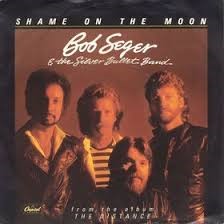
“It’s more like a western song – a cowboy song – than it is a country & western song. And the track is flawless, the best and tightest track on the album. We cut it in like two hours, and everyone decided it was the miracle track. But then we had to decide whether to use it or not because The Distance was going to be a real rock album.” ~ Seger
“Shame on the Moon”: Bob Seger’s Quiet Departure from the Road
Released in 1982 as the lead single from The Distance, “Shame on the Moon” stands out as one of Bob Seger’s most understated and emotionally restrained recordings. At a time when Seger was widely known for rock anthems like “Night Moves” and “Old Time Rock and Roll,” this song revealed a softer, more introspective side of his artistry.
Written by Rodney Crowell, “Shame on the Moon” blends folk, country, and pop influences, built around gentle acoustic guitars and a subtle rhythm that allows Seger’s vocal to carry the emotional weight of the song. Lyrically, it explores vulnerability, mistrust, and the fear of intimacy, captured in a refrain that suggests regret not just for love lost, but for love attempted.
The track is enhanced by backing vocals from Glenn Frey of the Eagles. Despite its quiet approach, the song was a major commercial success, peaking at No. 2 on the Billboard Hot 100 and reaching No. 1 on the Adult Contemporary chart, becoming one of Seger’s most successful singles of the era.
“Shame on the Moon” remains a defining example of Seger’s ability to communicate power through restraint, proving that his strength as an artist extended well beyond arena-ready rock to moments of subtle emotional honesty.
$400 VALUE – YOURS FOR ONLY $100 — SPECIAL BLOW-OUT SALE ON 50 AUDIO CDS OF 100 CLASSIC RADIO SHOWS!!!
HOLLYWOOD 360 Broadcast Schedule for April, 2026 (episodes subject to change):
FIBBER McGEE & MOLLY 3/23/48 Molly’s Easter Creation w/ Jim & Marian Jordan
THE ADV. OF SAM SPADE, DETECTIVE 4/17/49 The Report on Edith Hamilton w/ Howard Duff
THE GREAT GILDERSLEEVE 4/1/53 Easter Sunrise Service w/ Willard Waterman
PAT NOVAK, FOR HIRE 4/16/49 Dixie Gillian w/ Jack Webb
THE SHADOW 3/28/48 Death and the Easter Bonnet w/ Bret Morrison
4/11/26
DIMENSION X 6/17/51 A Pebble in the Sky w/ host, Norman Rose
T-MEN 4/19/56 The Case of the Jack That House Built w/ Gordon Glenwright
THE LIFE OF RILEY 4/5/47 The Child Beater w/ William Bendix
THE SEALED BOOK 3/18/45 The Hands of Death w/ Phillip Clarke
BOX THIRTEEN 10/3/48 Short Assignment w/ Alan Ladd
4/18/26
THE ADV. OF THE FALCON 10/22/50 The Double Nephews w/ Les Damon
CRIME CLASSICS 1/27/54 The Born Brothers and the Hangman, A Study in Nip and Tuck w/ Lou Merrill
DUFFY’S TAVERN 9/7/51 Army Surplus Helicopter w/ Ed “Archie” Gardner
FORT LARAMIE 3/25/56 The Coward w/ Raymond Burr
SUSPENSE 7/19/55 Back Seat Driver w/ Vivi Janis and Parley Baer
4/25/26
I WAS A COMMUNIST FOR THE FBI 6/7/53 Fifteen Minutes to Murder w/ Dana Andrews
MY FRIEND IRMA 2/9/48 Billy Boy, the Boxer w/ Marie Wilson
NIGHT BEAT 9/11/52 Larry Wilson, Dancing Understudy w/ Frank Lovejoy
HOPALONG CASSIDY 1/12/52 Gambler’s Luck w/ William Boyd
LIGHTS OUT! 7/27/46 The Battle of the Magicians w/ Boris Aplon
TO RECEIVE A WEEKLY EMAIL (EVERY MONDAY) WITH THE FULL 5-HOUR HOLLYWOOD 360 SHOW AND 40-MINUTE RADIO RARITIES PODCAST VIA DIGITAL DOWNLOAD LINKS THAT NEVER EXPIRE, LOG ON TO: https://www.hollywood360radio.com/product/hollywood-360-weekly-podcast-subscription/

